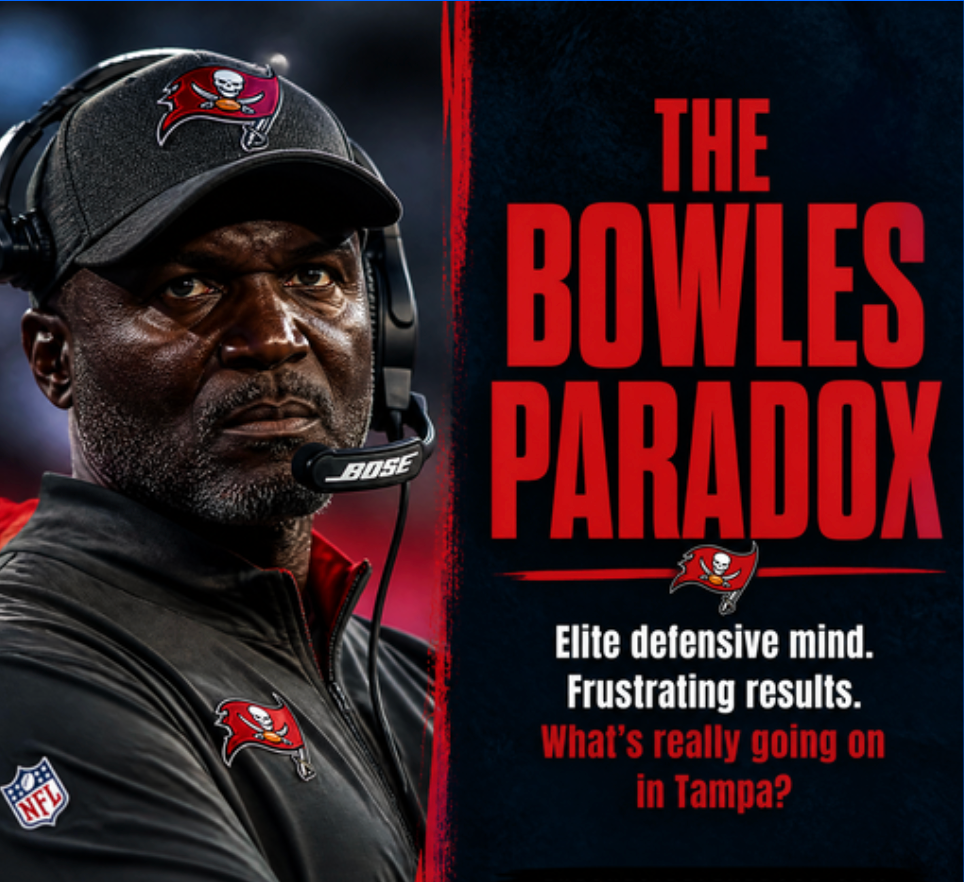
The Tampa Bay Buccaneers' head coach Todd Bowles finds himself in a peculiar position. Despite leading the team to multiple playoff appearances and maintaining a competitive roster in the post-Tom Brady era, he's become one of the most criticized coaches in the NFL—at least within certain circles. But dig deeper into the criticism, and a troubling pattern emerges that raises questions about media influence, echo chambers, and the very nature of modern sports discourse.
The Surface-Level Criticisms
If you spend any time on Buccaneers social media, fan forums, or certain team-specific websites, you'll encounter remarkably consistent complaints about Bowles:
"Too conservative" – This phrase appears with clockwork regularity across Twitter/X, Reddit's r/buccaneers, and Facebook fan groups.
"Overly complicated defense" – Fans repeatedly claim Bowles' defensive scheme is too complex, leading to blown coverages.
"Soft cornerback coverage" – Perhaps the most common refrain: "Why do the corners play so far off the line?"
"Not a real head coach" – A damning assessment that Bowles is fine as a coordinator but lacks head coaching ability.The criticism reached a fever pitch during the 2024-25 season when the Bucs experienced a late-season collapse. Reddit threads filled with calls for his firing, Facebook groups erupted with anger, and Twitter became a sounding board for frustration. When the Glazer family announced Bowles would return for the 2026 season, the reaction from certain segments of the fanbase was swift and overwhelmingly negative.
[Blog Post Image]
The Echo Chamber Effect: Where Does It Start?
Here's where things get interesting. When you trace the origins of much of the Bowles criticism, you find yourself repeatedly returning to the same sources: JoeBucsFan.com and, to a lesser extent, PewterReport.com. JoeBucsFan.com, in particular, has maintained a steady drumbeat of criticism. Recent headlines tell the story:
- "Sympathy For Todd Bowles" (concluding he's "not a legit NFL head coach, too scared")
- "Scathing Assessment Of Todd Bowles' Defense By Rondé Barber"
- "Proving 'Everyone Else Is Wrong' Is On Todd Bowles' Agenda"
The site's coverage often frames Bowles in a negative light, highlighting every misstep and questioning nearly every decision. PewterReport.com has also published critical pieces, including "Bucs Mailbag: Fans Are Unhappy With Todd Bowles," though their coverage appears more balanced overall.
The Repetition Problem
What's particularly striking is how the same phrases and talking points appear across platforms. A fan on Reddit will use nearly identical language to a commenter on a ¨ article, who sounds remarkably similar to someone posting in a Facebook Buccaneers group. The word "conservative" appears so frequently that it's become almost a reflex—regardless of the specific situation being discussed. This repetition suggests something beyond organic fan frustration: it indicates the influence of agenda-setting media. When influential fan sites consistently frame a coach negatively, they create what communication scholars call a "media narrative"—a storyline that becomes self-reinforcing. Fans consume the content, internalize the talking points, and then repeat them in their own discussions, often without deeper analysis. The narrative becomes the reality, even when the facts might tell a different story.
The Contrast With Reality
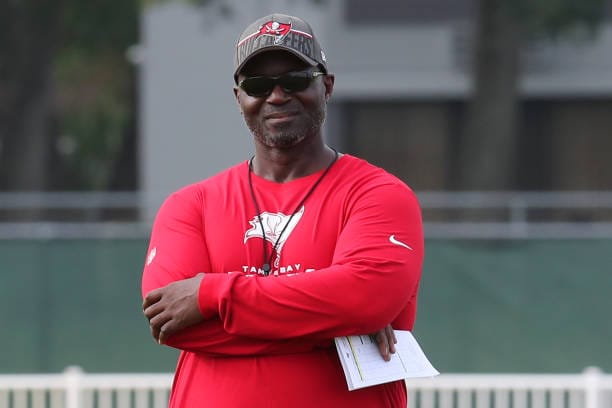
What makes this particularly interesting is the disconnect between the narrative and certain realities. When asked about his defensive schemes being too complicated, Bowles pushed back on PewterReport, stating: "We probably did less this year than we've ever done." He directly challenged the "too complex" criticism—but that clip received far less circulation than the criticism itself. Former Buccaneers head coach Jon Gruden even called out fans for their criticism of Bowles, suggesting the backlash was unfair. Yet Gruden's defense of Bowles was largely drowned out by the chorus of critics. Even within fan communities, there's pushback. One older Reddit post titled "Stop blaming Todd Bowles" acknowledged "some valid criticism of Bowles' game management" while arguing that other factors—like defensive execution—deserved more scrutiny. But these nuanced takes struggle to gain traction in an environment where the dominant narrative is already established.
Tellingly, actual Buccaneers players have pushed back against the narrative. Linebacker Lavonte David went so far as to suggest that "media and fans are out to get Todd Bowles," noting that everyone in the locker room loves him as a person and respects him as a coach. When there's this much disconnect between how players view their coach and how certain media outlets and influenced fans view him, it's worth examining who benefits from the narrative.
The Uncomfortable Question: Is There More At Play?
It's impossible to ignore that Todd Bowles is one of the few Black head coaches in the NFL, a league that has long struggled with diversity in leadership positions. While legitimate criticism of any coach's decisions is fair game, the intensity, consistency, and coordinated nature of the criticism directed at Bowles raise uncomfortable questions. Are the same standards being applied equally? The article titled "Media vs Reality: Is Tampa's media pushing an agenda? Why is Todd Bowles held to a harsher standard than Dan Campbell or Mike Vrabel?" suggests others have noticed this disparity. Consider: Mike Tomlin has faced similar "too conservative" criticisms throughout his career with the Pittsburgh Steelers, despite never having a losing season. Dan Campbell's aggressive decisions are celebrated as "gutsy" when they work and explained away as "learning experiences" when they don't. Meanwhile, Bowles is branded as "too conservative" for similar risk management, and when he does take risks that fail, he's labeled as incompetent.
The hard truth in the majority of the cases I've seen is that a segment of BUCS fans and followers can't/won't accept Bowles because he doesn't reflect what they think a head coach looks and/or feels like in their eyes.
Bowles isn't a loud caricature of a coach like some others. He doesn't do anything to brand himself. He doesn't do mean faces, and he doesn't have a signature fashion sense or catchphrase. He's just a coach. Deeper than that, he's a defensive specialist coach, which pushes him further out of favor with casual fans.
Casual fans have been programmed to associate winning with an offense-first mindset. The NFL has shifted the rules to tilt the balance toward offense and scoring. So, a defensive-minded head coach will generally be frowned upon by the less-than-hardcore fan who takes every aspect of the game equally into account. To the casuals, Todd Bowles, as a head coach, is an albatross. He's holding the team back from hiring an offense-minded head coach who would guarantee offensive continuity for years to come. He'd be fine enough as a defensive coordinator, but he's not head coach material whatsoever. He's not fiery enough. He doesn't breed confidence. He doesn't care enough to get animated.
At some point, these same sentiments were directed at the aforementioned Mike Tomlin, Bill Belichick, Tony Dungy, and most defensive head coaches. Defense-oriented head coaches generally have a more nonreactive persona than offense-minded head coaches. That's largely a reason why the longest-tenured coaches in the NFL tend to come from the defensive side of the ball.
More recently, those defensive coaches are looking and feeling a lot more like Todd Bowles, to the chagrin of some of the more vocal "fans."
"What about Mike Vrabel and Dan Campbell?!" Well, Campbell had two great seasons with two of the best offensive and defensive coordinators by his side. But as soon as both were gone, the brash talk and wild risks looked a lot different.
And Vrabel..that's another story altogether.
The Business of Outrage
There's also a business element to consider. Controversy drives clicks, comments, and engagement. A measured, nuanced take on a coach's performance doesn't generate the same traffic as a headline declaring he "needs to GO!" or questioning whether he "deserves to be the head coach of an NFL team."Fan sites depend on traffic for revenue. I should know. I've independently owned and operated my own since 2020. Passionate, angry fans click more, comment more, and share more than satisfied and/or sensible ones. Creating or amplifying a narrative that keeps fans emotionally invested—even if that emotion is frustration—serves a business purpose.
It's not just fan sites anymore, either. It's EVERY avenue of social media. Alleged Buccaneers fan groups on Facebook flood timelines with aggregated and often artificial rage bait that gets hundreds of "likes". And they don't even really make money; it's just for the dopamine hit from engagement.
Breaking Free From the Echo Chamber
The challenge for Buccaneers fans is to distinguish between legitimate, thoughtful criticism and recycled talking points that originate from a limited number of sources with potential biases or business incentives. Legitimate questions to ask:
- Did this specific decision make sense given the game situation?
- What is Bowles' actual record compared to his peers?
- Are the defensive struggles due to scheme, personnel, injuries, or a combination?
- How have players developed under his leadership?
Red flags that you're in an echo chamber:
- Using the exact same phrases you've read elsewhere without analysis
- Criticizing Bowles for a decision without considering the context
- Assuming every negative outcome is due to coaching rather than execution
- Accepting narratives without checking whether the facts support them
The Bottom Line
Todd Bowles deserves fair criticism when he makes questionable decisions—every coach does. But the pattern of criticism surrounding him appears to be less about objective analysis and more about narrative reinforcement driven by a handful of influential media sources.